A north-facing garden can feel like the poor relation of the outdoor world. The light is flat, the soil is often damp, and by November the whole space seems to close in on itself. Yet some of the most rewarding small gardens in the UK face north — they simply need a different approach. Instead of chasing sun-loving flowers that will never thrive, work with what you have: soft, even light, cool soil that holds moisture, and a backdrop that makes pale colours glow. Get the bones right and you can have something worth looking at in every month of the year.
Watch the Light for a Day Before You Dig
Start by finding out what your garden actually receives. A due north-facing plot gets almost no direct sun between late autumn and early spring, then catches low sun at the beginning and end of summer days, when the sun rises north of east and sets north of west. Your brightest spots are often at the edges — along an east-facing fence in the morning, or the corner where the sun slips past at seven in the evening.
Spend a weekend noting where light falls and how long it lingers. A small courtyard can be bright for hours in June without ever being properly sunlit, and bright indirect light suits a surprisingly wide range of plants. Photograph the garden at 9am, 1pm and 5pm and keep the pictures on your phone; they are more useful than memory when you are standing in a nursery in April.
Then check the ground. Shade slows evaporation, so north-facing borders are usually the last to dry out and the first to grow moss. Dig a spadeful of soil in winter. If it is sticky and grey, plan to work in plenty of compost and a little horticultural grit, and consider raising the beds with a layer of topsoil so roots are not sitting in cold, wet ground for months.
Pale Surfaces, Mirrors and Vertical Space
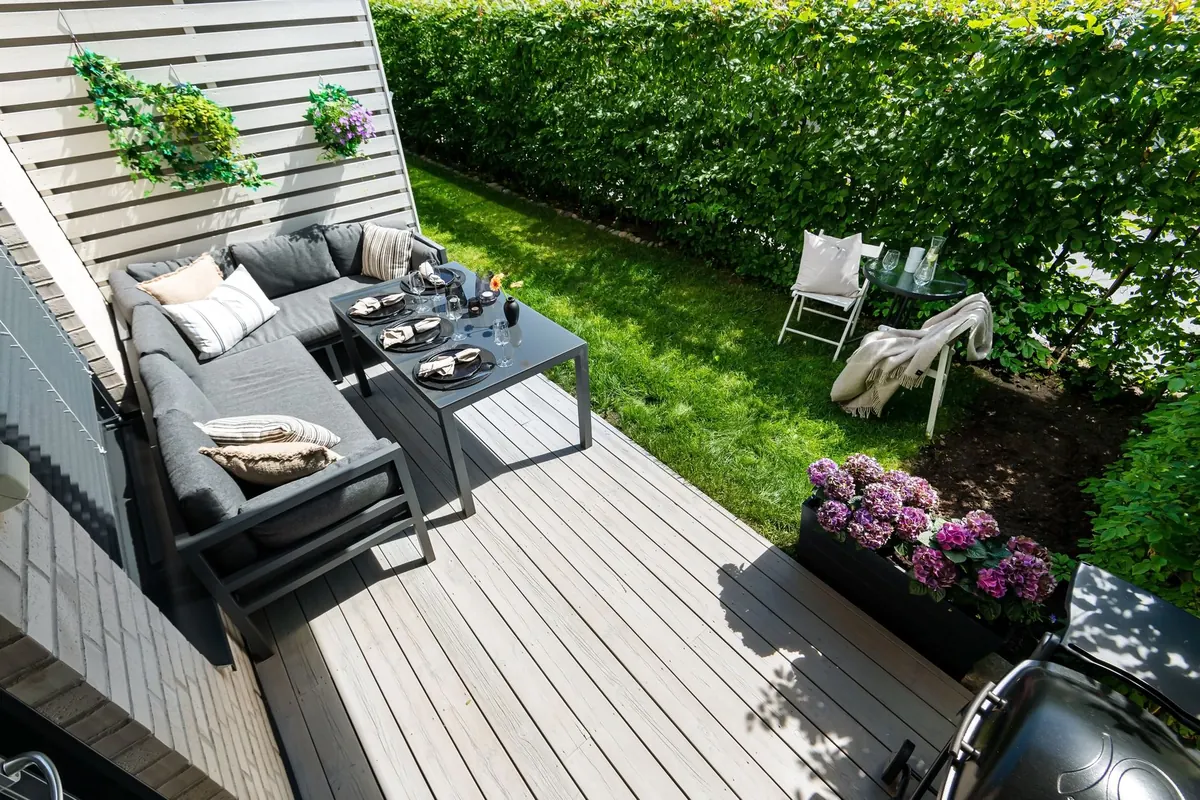
In a shady garden, hard landscaping does half the work. Pale sandstone, limestone, light grey gravel, cream brick or even painted concrete all bounce light back onto the plants. Dark slate and black decking swallow it. If you are laying a new path or patio, choose the lightest tone that still suits the house, and avoid a busy pattern that draws the eye downwards.
Keep the layout simple. A path that curves gently towards the far corner makes a small garden feel longer than one that stops dead at a fence. Give the borders real depth — 60cm is a minimum for a layered planting scheme, and a metre is better if you have it.
Ideas that cost little
- A mirrored panel fixed to a fence, positioned so it reflects greenery rather than a wall or a bin store.
- Trellis on the shadiest wall, with a climber that tolerates shade: ivy, Hydrangea petiolaris, or a pyracantha for winter berries.
- Wall-mounted planters and shelves at eye level, where light is strongest.
- A slim multi-stem tree, such as Amelanchier or Acer palmatum, to lift the eye above fence height.
Build the Skeleton First: Evergreens and Grasses
Colour does not have to mean flowers, and in a north-facing garden it often shouldn't. Evergreen leaves carry the space through the twelve weeks when little is in bloom. Sarcococca, skimmia, fatsia, mahonia, choisyia, ferns and liriope all cope with shade and give you something solid to build around.
Then add foliage that behaves like flowers. Variegated and golden leaves light up gloomy corners beautifully. Look for Euonymus fortunei, Brunnera 'Jack Frost' with its silvered leaves, golden Hakonechloa macra, Carex oshimensis 'Evergold', and the many heucheras, whose leaves run from lime through amber to deep plum. Grasses earn their place too: they move and rustle in still air, which matters when the light is flat and nothing catches the eye.
A Planting Plan for All Four Seasons
The trick is to layer in time as well as space: bulbs and low perennials at the front, herbaceous plants in the middle, shrubs and a small tree behind, climbers on the boundaries. Then choose something for each season so there is never a gap.
- Late winter: snowdrops, Cyclamen coum, Helleborus niger and hybrid hellebores, winter-flowering heather, and Sarcococca for scent near a door. Cornus sanguinea 'Midwinter Fire' gives bare, glowing stems.
- Spring: daffodils, Anemone blanda, epimedium, pulmonaria, tiarella, brunnera and fritillaria — woodland bulbs that are happiest in exactly these conditions.
- Summer: hydrangeas, astrantia, hardy geraniums such as Geranium phaeum and G. x oxonianum, hostas, astilbe, thalictrum and foxgloves.
- Autumn: Japanese anemones, hydrangea flowers fading to green and bronze, sedum heads turning russet, berries on skimmia and pyracantha, and acer foliage.
Lean towards whites, creams, pale yellows and soft pinks, which glow in low light. Deep purples and dark reds tend to vanish into shadow, so use them sparingly and only where a pale wall or gravel sits behind them.
Containers, Lighting and the Winter View
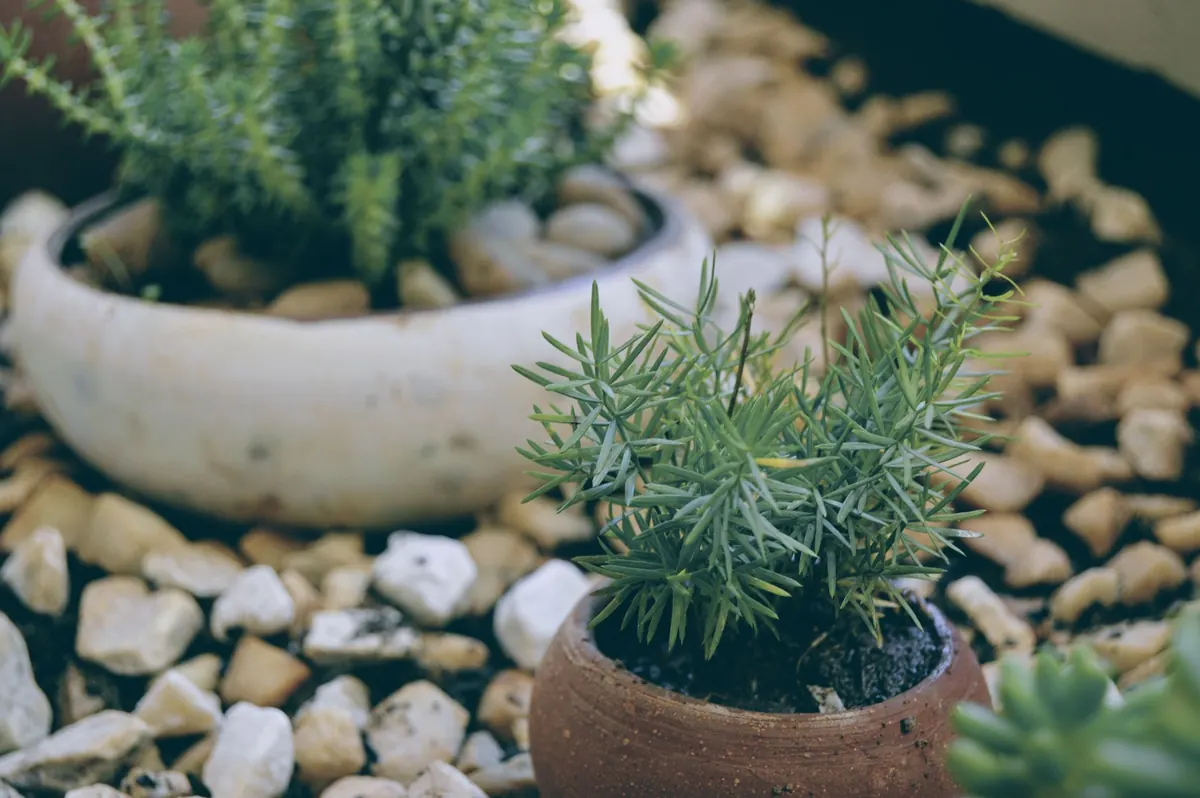
Pots give you flexibility that borders cannot. Move them round the garden as the seasons shift — towards the sunniest corner in summer, close to the house in winter where you can see them from the kitchen window. Group them in threes for impact rather than dotting them about.
Drainage matters more than feeding. Raise pots on feet so water does not stand in the saucer through winter, and water less than you would on a sunny patio; shaded compost stays damp for a long time.
Finally, plan for the evenings. Two or three low, warm-white lights — an uplighter under a shrub, a small string of lights through the branches of a tree — will extend the garden's useful hours from October to March and make winter structure readable after dark. Keep them low and subtle so you notice the planting, not the lamps.
Getting Started This Season
You do not need to redo everything at once. Work in this order and the garden will improve month by month.
- Watch and photograph the light across a full day, and note where the ground stays wet.
- Improve the soil in your main border with compost and grit, and raise the level if it is waterlogged.
- Lighten one hard surface — a path, a patio, or simply a fence repainted in a pale shade.
- Plant evergreens and a small tree in autumn or early spring, while the soil is warm and moist.
- Add bulbs each autumn. They are the cheapest way to buy yourself colour in the hardest months.
- Finish with containers and a couple of lights, then move them about until they look right.
Keep a simple note of what flowers in your garden and when. After a year you will see the gaps plainly, and filling them — with one pot of snowdrops, one late-flowering anemone — is far easier than starting from scratch.
Photo: Cz Jen / Pexels