A British patio has to do two jobs at once. In July it is a sun trap; by October it is a wet, windblown corner of the garden that nobody wants to sit in. Planning for the second version is what turns a paved area into somewhere you can genuinely host. The good news is that the decisions which matter most are made before the first slab is laid: position, shelter, drainage, light and heat. Get those roughly right and you will not need to improvise with a flapping gazebo every time friends come round.
Start with the people, not the paving
Before you look at materials, work out how the space will be used. Six people around a dining table need roughly three metres by three metres for the table and chairs, plus close to a metre behind each chair so people can push back without teetering on the edge. A drinks-and-nibbles patio for ten, standing with a few high tables, needs far less room and a very different shape. Two chairs and a small bistro table for morning coffee needs less again.
Then count the steps from the kitchen. If you have to carry a tray through two doors, down a step and across a lawn, you will use the patio less than you think. A level route, a wide threshold and somewhere to put a tray down when you arrive will quietly earn their keep.
Use the sun you actually get
Spend an evening outside with a chair before you commit to anything. Note where the sun sits at seven in the evening in June, and where it has gone by five in September. A patio tucked against a south or west-facing wall will hold warmth into the evening and shelter you from the worst of the wind; a corner between two walls can create a small, noticeably kinder microclimate.
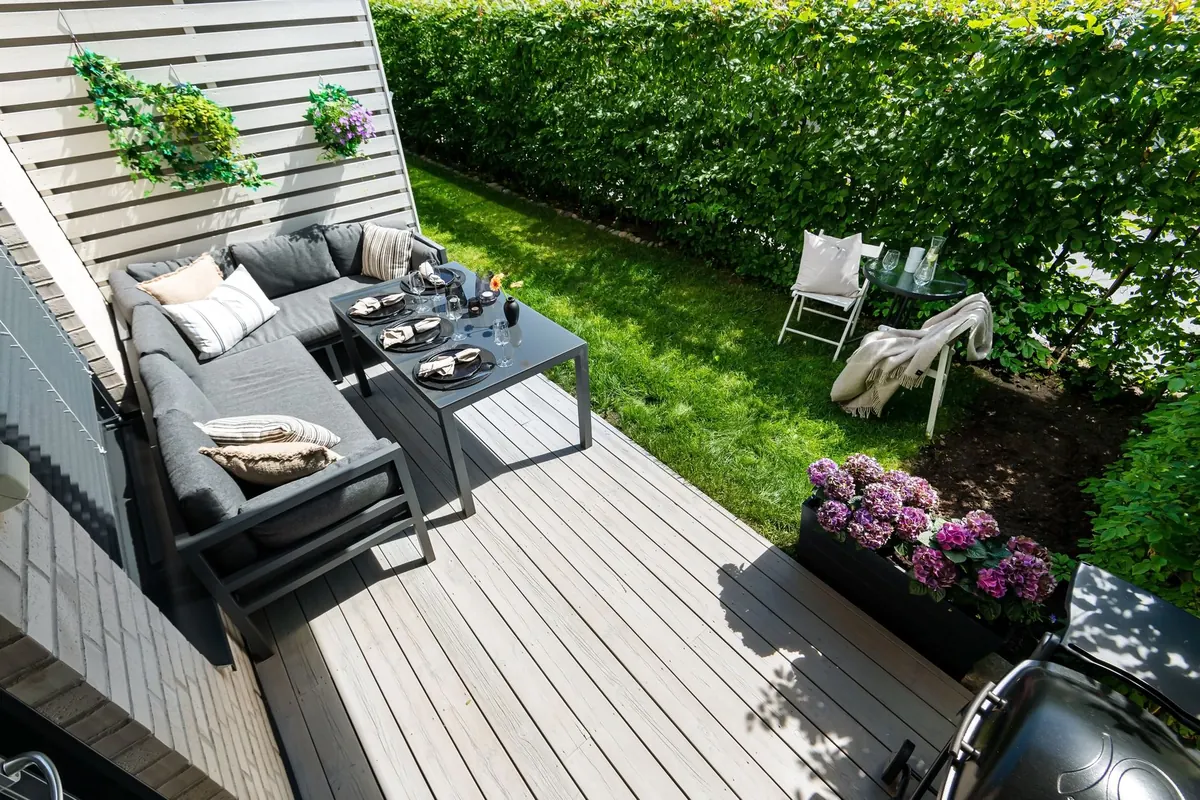
Then divide the space into loose zones: eating, lounging, cooking, and a clear route between them. Keep the barbecue a sensible distance from doors, open windows and overhanging shrubs, and make sure the cooking area is not the only way through to the seating. If the garden slopes, terraces or a single well-placed step will usually beat one large tilted surface.
Shelter that copes with wind as well as rain
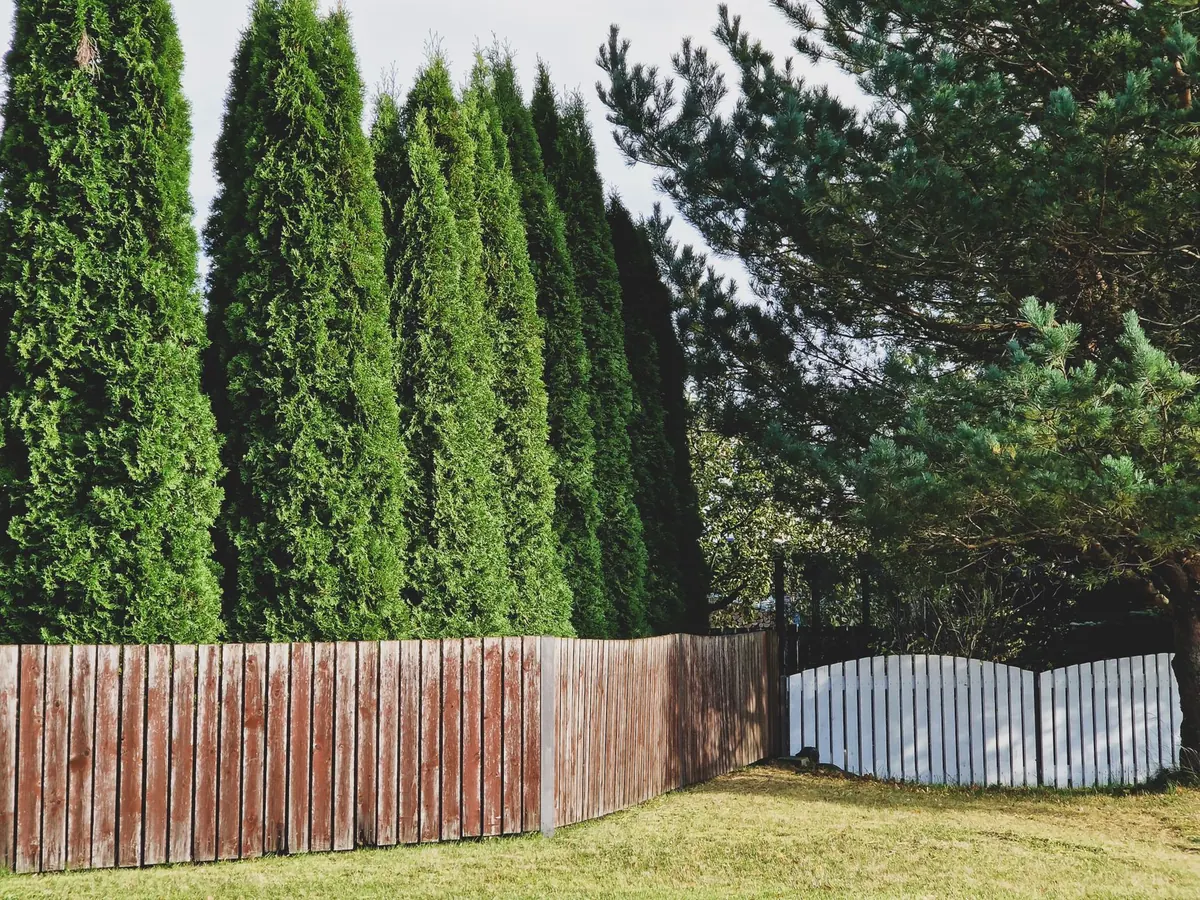
In the UK, wind does more damage to an evening than rain does. A canopy that blocks a still shower is useless when a breeze drives the rain in sideways, so think about where the weather comes from and shelter that side first. Fences, hedges and slatted screens work well; a slatted screen lets some air through, which reduces the buffeting you get behind a solid panel.
- Retractable awning: quick, neat, good against both sun and light rain. It needs a sound wall to fix to, and should be rolled away when you are not there.
- Pergola with a solid or polycarbonate roof: the most permanent option, and the one that makes a patio feel like a room. It needs a slight fall so rain runs off, guttering to take water away, and fixings that can handle a gust.
- Cantilever parasol: flexible and good over a dining table, but needs a heavy base and a reasonably sheltered spot.
- Shade sail: excellent for summer glare, less so for rain unless it is tensioned tightly enough that water cannot pool.
- Pop-up gazebo: fine for a one-off party, frustrating as a permanent answer.
Whatever you choose, check where the water ends up. Shelter that dumps a run of drips onto the seating, or against the back door, is worse than no shelter at all.
Surfaces, levels and drainage
Paving should fall gently away from the house, never towards it, so that rainwater runs off rather than sitting against the threshold. A channel drain or gravel strip just outside the door adds a useful second line of defence. Permeable options such as resin-bound gravel, block paving laid with gaps, or decking with spaced boards all help water disappear rather than pool.
Think about grip as well as looks. Smooth porcelain is easy to clean but can be slippery when wet; riven sandstone, clay pavers and textured porcelain offer more traction. Decking in a shaded, damp corner will grow algae unless it is cleaned and treated, so grooved or textured boards are the safer choice. Furniture also matters: a table with adjustable feet will sit level on a slightly uneven surface without wobbling every time someone leans on it.
Lighting for long evenings
Good outdoor lighting is layered, not floodlit. Use warm white bulbs rather than cool white, and aim light at the space rather than into people's eyes. A few festoon lights strung between posts or along a pergola give a soft background glow; wall lights on the house light the table; small uplighters or spike lights in borders add depth. Step lights are worth fitting if there is any change in level.
Put a switch you can reach from indoors, and consider dimming so the same lights work for a barbecue at eight and a quiet drink at eleven. Outdoor sockets in weatherproof housings make life easier, and you will want a waterproof box for phone chargers and a speaker. Outdoor electrics are not a DIY job: use a qualified electrician who can install and certify the work properly, and choose fittings rated for exposed outdoor use.
Heating, honestly assessed
Heating a patio in Britain takes the edge off a cool evening; it does not make January comfortable. Electric infrared heaters warm people and surfaces rather than the air, so they work best mounted overhead and angled down at the seating. Gas patio heaters throw heat further but need ventilation and should never be used in an enclosed or covered-in space, where carbon monoxide can build up.
Fire pits and chimineas are sociable and lovely, but they need a safe distance from fences, furniture and low branches, and the smoke will decide who sits where. Burn dry, seasoned wood to keep the smoke down. Sometimes the simplest comfort measures win: a weatherproof box of blankets, cushions stored indoors, and a table near the door for hot drinks will extend an evening further than a heater that only warms one pair of shoulders.
A practical order of work
- Mark out the patio with string and pegs, then move your indoor furniture onto it and sit there for an evening. You will spot the wind, the glare and the puddles immediately.
- Fix levels and drainage first. Everything else is easier once water is going where it should.
- Add shelter on the side the weather comes from, with a plan for where rain will run.
- Install lighting and outdoor sockets, using a qualified electrician.
- Finish with heat, storage and planting: scented herbs or shrubs near the seating, and a bench with lift-up storage for cushions and blankets.
If your plans include raised decking, a large covered structure or new drainage, check whether you need planning permission or building regulations approval with your local authority before you start. Build in stages if the budget is tight, but do the groundwork properly once, and the patio will keep earning its place through far more of the year.
Photo: Lisa Anna / Pexels