Garden furniture has a way of outlasting the enthusiasm that bought it. A set that looked perfect on a bright Saturday in May can be a different proposition by the following March, when it has been rained on, sun-bleached and asked to hold four people and a tray of drinks. The material you choose decides how much of that the furniture shrugs off — and how much of your summer you spend maintaining it instead of sitting on it.
Rattan: read the label before you fall for the look
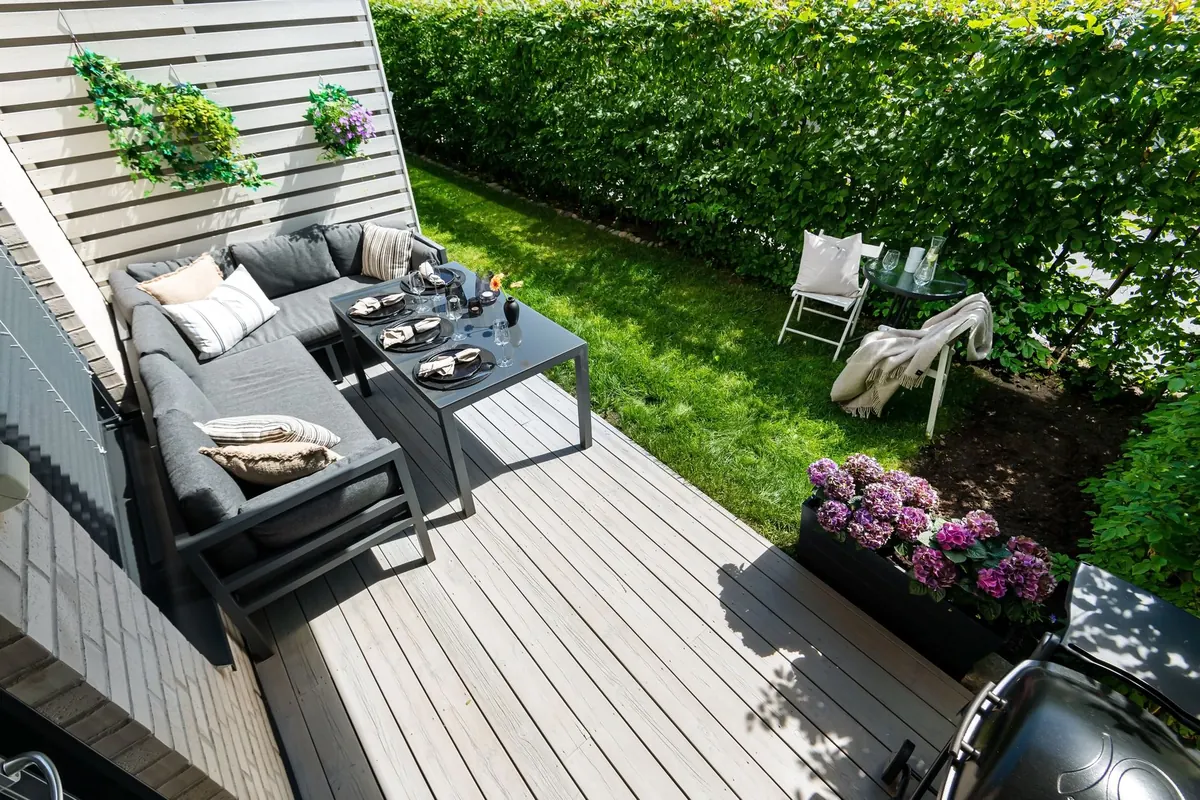
Natural rattan is a climbing palm from South-East Asia. It is beautiful and light, and in a British garden it is a poor long-term bet: left outside through a wet winter it sags, splits and grows mould. The good news is that almost nothing sold as garden rattan today is natural. What you are buying is synthetic weave, usually high-density polyethylene wrapped around an aluminium frame, which behaves very differently.
Well-made synthetic weave is one of the most comfortable outdoor materials going. It does not get painfully hot in sun or icy in shade, it has enough give to feel soft, and it manages without a thick cushion. Aluminium frames will not rust. The caveats are worth knowing: cheap weave can fade and turn brittle after a few seasons of UV, the gaps between strands collect pollen, dust and bird mess, and lightweight sets shift in strong wind.
- Choose it if you want a sofa-style set you can leave out from April to October.
- Check that the frame is aluminium rather than steel, and that the weave is tight with no gaps at the corners.
- Clean with warm soapy water and a soft brush — a pressure washer will lift and fray the weave.
Wood: the material that rewards a little attention
Hardwoods dominate the better end of the market. Teak is the benchmark: dense, naturally oily and resistant to rot, which is why teak benches turn up in public gardens decades old. It costs more, and it weathers to a soft silver-grey unless you oil it. Acacia and eucalyptus sit a step below teak on durability but are heavier and harder than most softwoods, and they respond well to an annual oiling.
Softwoods such as pine and spruce are the budget option. Pressure-treated timber can last years; untreated softwood left standing on wet grass will not. Whatever the species, the details matter as much as the wood itself — stainless steel fixings, decent joinery, and feet that keep the legs clear of damp paving.
With hardwood you have a choice. Oil it once or twice a year to keep the warm honey tone, or leave it alone and let it go grey. Both are perfectly respectable. What you should not do is jet wash it: that raises the grain, opens the surface and makes future weathering uneven.
Metal: sturdy, elegant, and occasionally very hot
Aluminium is the sensible choice for a British garden. It is light enough to shift when you are cutting the grass, it does not rust, and powder-coated finishes hold up well if you do not scrape them. Steel is stronger and often cheaper, but it relies entirely on its coating; one chip through to bare metal is where rust starts, and it spreads.
Cast iron is the heavyweight option, literally. It looks wonderful on a period terrace and needs repainting every few years to stay that way. Whichever metal you pick, inspect the fixings — stainless steel bolts and washers will outlast mild steel ones by a wide margin.
One practical point people forget: metal gets hot. A dark metal chair in full July sun is unpleasant against bare legs. In a shaded courtyard or under a parasol it is a non-issue; on an open south-facing patio, pair it with cushions.
Plastic and resin: better than its reputation
The stackable polypropylene chair is the most honest piece of garden furniture ever made. It is light, wipes clean, costs little and stacks in a shed. Modern resin furniture, including the rattan-look weave, is a long way from the brittle white chairs of twenty years ago, and some ranges use recycled material.
The trade-offs are weight and longevity. Light chairs blow over and skitter across paving in a gust, cheap plastic can crack in a hard frost, and colours fade in strong sunlight. Buy the heaviest version you can comfortably move and you will avoid most of these problems.
Comfort matters more than material
A beautiful set that is uncomfortable is an expensive mistake, and comfort is mostly geometry.
- Seat height: around 45cm suits most adults; lower than that and getting up becomes a project.
- Table height: roughly 74cm is standard for dining — check your chairs tuck under without the arms clashing.
- Seat depth: deep sofas need more cushion support than shallow ones.
- Cushions: quick-drying foam with removable, washable covers. Bring them in overnight and over winter; it is the single biggest thing you can do to make them last.
A simple care routine for the UK year
Spring: wash frames and weave with warm soapy water, oil hardwood if you are keeping the colour, and check bolts and welds. Summer: rinse pollen and bird mess off regularly, and move lightweight pieces into shelter before forecast gales. Autumn: clean everything properly, let it dry fully, then store cushions indoors. Winter: raise furniture off wet ground or stack it in a shed, and use breathable covers rather than plastic sheeting, which traps condensation against the surface.
Choosing for your garden
Match the material to the way you actually live. If you want a set you can sit on five minutes after deciding to eat outside, synthetic weave on an aluminium frame is hard to beat. If you enjoy a bit of maintenance and want furniture that ages gracefully, hardwood earns its keep. Aluminium suits small gardens where things get moved around; plastic suits balconies, tight budgets and anyone who would rather spend weekends doing something else. Buy the best version of the material you can afford, keep it clean and dry, and it will look after you for years.
Photo: geniusvv / Pixabay