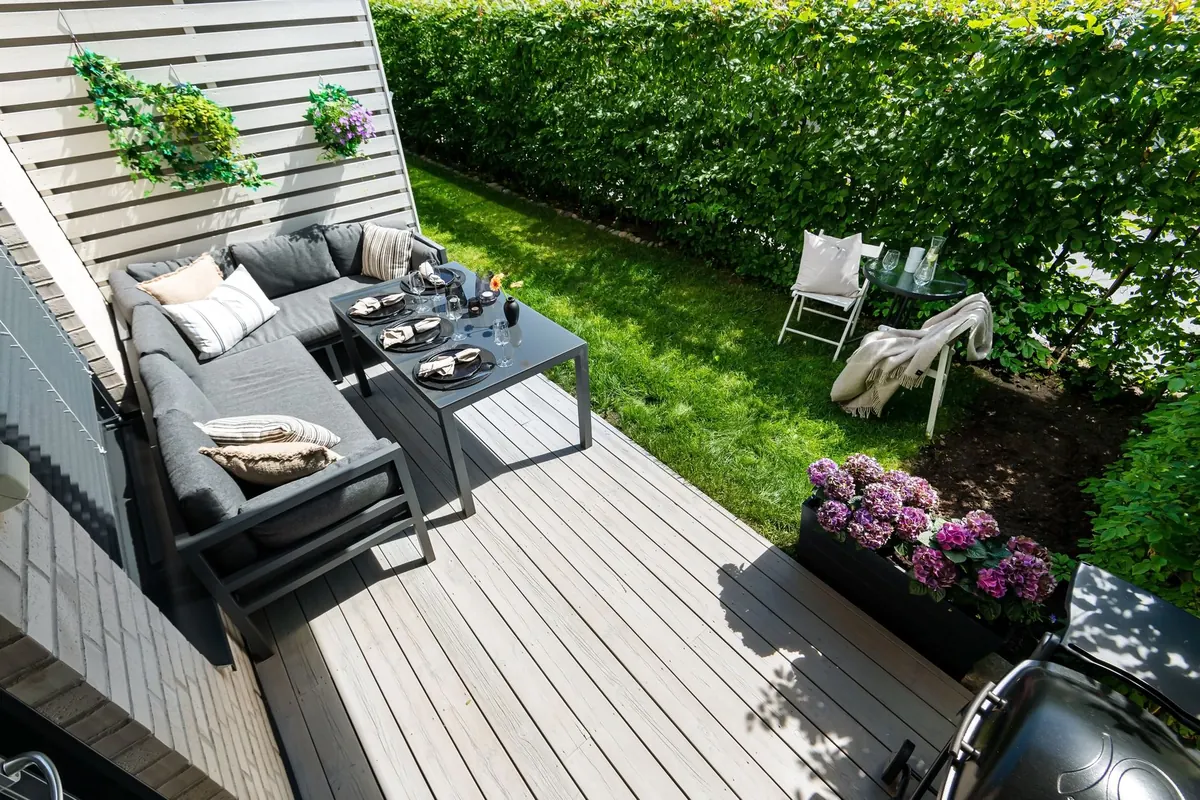
Stand at the back door on a wet Tuesday in February and the garden looks very different from the estate agent photo. Is that a slick green film on the decking, or a patio where moss has crept between every slab? Both can be sorted, but they point to the real question: which surface will still be earning its keep ten years from now, with your family tramping across it? Cost, upkeep, grip and paperwork all weigh in, and the answer rarely comes down to looks.
Cost: Where the Money Actually Goes
A patio is mostly groundwork. You pay for excavation, a compacted sub-base, a bedding layer and the labour to lay each slab accurately. Get the sub-base wrong and the whole thing dips and rocks within a couple of winters. Decking shifts the spend upwards instead: frame, joists, boards, fixings and a finish, but often far less digging, which helps on sloping ground or where you would rather not disturb tree roots.
Materials move the number more than anything else. Concrete slabs sit at the affordable end; natural stone and porcelain climb steeply. On the decking side, softwood is the budget option, hardwood costs more, and composite sits at the top on materials alone, though it claws some of that back on maintenance.
Whatever you choose, compare quotes on what is included, not just the headline figure:
- Waste removal and skip hire
- Sub-base depth and type, and whether it is compacted in layers
- Weed membrane, edging, drainage and soakaway arrangements
- Steps, handrails, lighting, and cutting around drains or manholes
- Sealing, oiling or staining after installation
Three written quotes from local firms is a sensible baseline. The cheapest is often the one that leaves the spoil on your drive.
Maintenance: Two Very Different Chores
Timber decking is not a build-and-forget surface. Algae and mould love damp shade, and untreated boards go grey and rough. Plan on cleaning once or twice a year and re-oiling every year or two, plus the odd replacement board or popped screw. The frame beneath matters as much as the boards: if air cannot move under the deck, joists rot quietly.
Composite decking cuts the workload but is not zero-maintenance. It still needs an occasional wash, and in a north-facing corner it can develop surface mould. Quality varies widely, so check what you are buying rather than trusting the label.
Paving asks for different work: weeds and moss in the joints, jet washing that strips jointing sand, re-sanding, occasional repointing, and a decision about sealing porous stone. On clay soil, a few slabs may lift and rock as the ground moves, and those need relaying rather than ignoring.
A rough annual routine looks like this:
- Spring: clean the surface, treat algae, check joints or fixings.
- Autumn: clear leaves so nothing sits wet for months, and check drainage.
- Before winter: re-oil timber, top up jointing sand, test any lighting on steps.
A well-built patio can last for decades with modest attention. A timber deck typically has a shorter working life, though replacing boards is straightforward if the frame is sound.
Safety and Comfort Underfoot
Both surfaces get slippery; the trick is knowing when and why. Smooth porcelain and polished stone can be treacherous in the wet, especially under trees where a film of algae builds. Textured finishes and riven stone are far kinder. Grooved or ridged decking boards give decent grip, but a shaded deck that never dries will grow green film whatever the material.
Level changes are where accidents happen. A deck usually means a step down to the lawn, so plan a generous tread, a handrail where there is any drop, and lighting on the step rather than across the garden. Patios can be laid to a gentle fall, which suits prams, wheelbarrows and anyone unsteady on their feet.
Check the small things too: lifted slab edges, boards that flex, screws sitting proud, and any gap wide enough to catch a heel. If you are building a raised platform, fit proper guarding and take advice from building control or an experienced installer before you commit.
Planning Permission and Building Regulations
A patio laid at ground level rarely needs planning permission. Decking is more likely to attract attention, particularly if it is raised, if it overlooks a neighbour's garden, or if a large share of the garden ends up covered. As a general guide, a deck standing more than about 300mm above ground often needs permission, and permitted development rights usually do not apply to flats, maisonettes, conservation areas or listed buildings. Rules differ in Scotland, Wales and Northern Ireland.
In England, hard surfaces in a front garden of more than five square metres generally need to be permeable or drain to a soakaway, so rainwater does not run into the road.
Building regulations can also come into play where a deck is attached to the house, significantly raised, or part of an access route. Check with your local planning authority before ordering materials, talk to neighbours early, and seek professional advice if the property is listed.
Which Suits the Garden You Have
Decking tends to win in specific situations:
- A sloping site where steps and retaining walls would otherwise be needed
- Awkward corners, or ground that is hard to dig
- Where you want storage underneath, or services running below
- A fast installation, or a surface you may change later
Paving tends to win where the ground is already reasonably level, where you want the longest lifespan with the least fiddling, and where you need a firm, flat run for wheelchairs, trolleys or heavy planters. It also handles the wear of a busy route to the shed far better than boards.
Materials and Finishes Matter More Than the Category
A cheap deck beats a badly laid patio, and the reverse is just as true. Softwood boards need preservative and annual oiling; hardwood and good composite boards cost more but hold their looks. For paving, concrete slabs are dependable, sandstone and limestone look warm but are porous, and porcelain is dense, low-absorbency and easy to clean, provided you choose a textured, slip-resistant finish rather than a polished one.
Budget for the details as well as the surface: a decent membrane, clean edges, a well-drained sub-base, and materials that sit comfortably with the house rather than fight it.
Making the Decision
Measure the space properly, then watch it through a wet week. Note where water sits, where the sun lands at four in the afternoon, and where you actually want to sit with a cup of tea.
- Decide how you will use it: dining, lounging, play, or simply a route to the shed.
- Set a budget that includes groundwork, drainage, lighting and the first few years of upkeep.
- Get three quotes, ask to see recent local work, and agree what happens to waste.
- Confirm permissions before ordering anything.
- Book installation for a dry spell if you can, and let new paving or decking settle before sealing.
A good surface is one you stop thinking about. Choose for your garden's slope, shade and soil, keep the drainage honest, and either option will serve you well for years.
Photo: Kranich17 / Pixabay